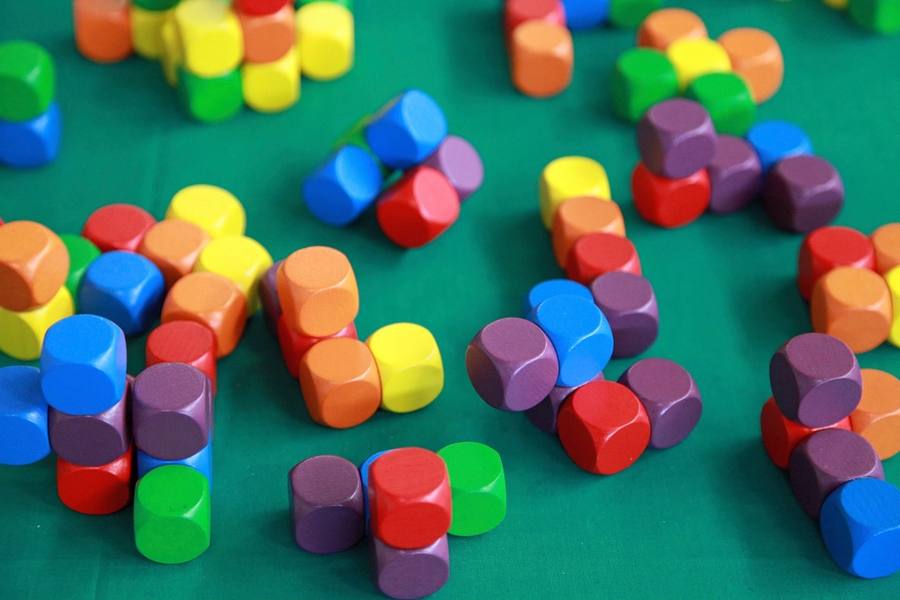
Representative image (stock photo); not the exact product.
Accuracy Is What Makes Them Work
Wooden blocks stack by gravity alone, which means any inaccuracy in cutting produces towers that lean and fall for reasons a child cannot see or correct.
Precisely cut blocks in consistent unit proportions stack reliably and allow deliberate building rather than repeated collapse.
That precision is the difference between a set that builds confidence and one that produces continuous failure, and it is not visible in a photograph.
Unit Proportions Teach Without Trying
Traditional block sets use related proportions — two half blocks equalling one whole, four quarters equalling that — which builds an intuitive grasp of fractions and equivalence.
A child discovers those relationships by building rather than being taught, and that discovery is considerably more durable than being told.
Sets of random unrelated sizes lose all of that, and they look similar in a box while being a genuinely different toy.
Weight, Sound And Falling
Hardwood blocks are heavy enough to build stable structures and heavy enough to hurt when a tower falls on a foot or a hand.
That weight is what makes them work and is a real consideration with a toddler, and lighter softwood blocks are safer and stack less well.
Blocks also fall loudly onto a hard floor, which a rug addresses and which is worth thinking about in a flat with neighbours below.
Finish And What Goes In Mouths
Young children put blocks in their mouths, which makes the finish a genuine consideration rather than a cosmetic one.
Unfinished hardwood, or a finish stated as compliant with toy safety standards, is what to look for, and an unspecified lacquer on an unbranded set is not reassuring.
Painted blocks chip over years and a chipped edge is a splinter risk, and plain wood ages by darkening rather than by failing.
They Last Generations
A hardwood block set has essentially nothing to break, no batteries, no electronics and no software to stop being supported.
Sets survive decades and are genuinely passed between generations, which almost nothing else in a toy box does.
That longevity makes the initial cost a poor guide to value, and a good set works out cheaper per year than almost any alternative.
Set size follows the same logic as brick sets, which is that small collections build small things and disappointment. A meaningful set has enough pieces for a structure big enough to walk into or drive a car through, which is considerably more than most gift-sized boxes contain. Adding to a set over several birthdays works well since plain blocks never go out of production or change design, which is the opposite of how licensed toys behave.
Softwood and hardwood sets look similar and behave differently, since softwood dents under normal play and loses the crisp edges that make accurate stacking possible. Hardwood costs more and keeps its geometry for decades, which is the whole argument for buying it.
Arches, cylinders and ramps extend what plain rectangles can do considerably, and a set containing a few of each supports far more ambitious building than one of squares alone.
The Verdict
The most durable open-ended toy there is, where cutting accuracy determines whether building is possible at all.
Inaccurate blocks collapse for invisible reasons, hardwood hurts when it falls, and painted finishes chip into splinter risks.
Buy accurately cut blocks in related proportions. Random sizes look the same in a box and are a different toy.
At a glance
Pros
- Nothing to break, no batteries, lasts generations
- Unit proportions teach fractions through building
- Weight allows genuinely stable structures
- Plain wood ages by darkening rather than failing
Cons
- Inaccurate cutting causes invisible collapses
- Hardwood hurts when a tower falls
- Loud on hard floors
- Painted finishes chip into splinter risks
Frequently asked questions
Why does the tower keep falling?
Usually inaccurate cutting. Blocks stack by gravity alone, so any inconsistency produces leaning towers for reasons a child cannot see or correct. Precisely cut blocks in consistent proportions allow deliberate building.
Do unit proportions matter?
Genuinely. Sets where two halves equal a whole and four quarters equal that build an intuitive grasp of fractions through play. Random unrelated sizes lose all of that while looking similar in a box.
What finish is safe?
Unfinished hardwood, or a finish explicitly stated as compliant with toy safety standards, since young children put blocks in their mouths. An unspecified lacquer on an unbranded set is not reassuring.
Specifications
| Type | Hardwood building blocks |
| Critical quality | Cutting accuracy |
| Proportions | Related unit sizes |
| Teaches | Fractions and equivalence by discovery |
| Weight | Stability, and a hazard when falling |
| Finish | Unfinished or toy-standard compliant |
| Painted | Chips into splinter risks |
| Lifespan | Decades; passed between generations |
The bottom line
Lasts generations and teaches fractions by accident. Cutting accuracy is everything and never shows in a photo.
Check Price on Amazon